
1971–1976 · Utility and discernment
Vladimir Krichevsky:
posters as arguments
6 min read · 5 sourced works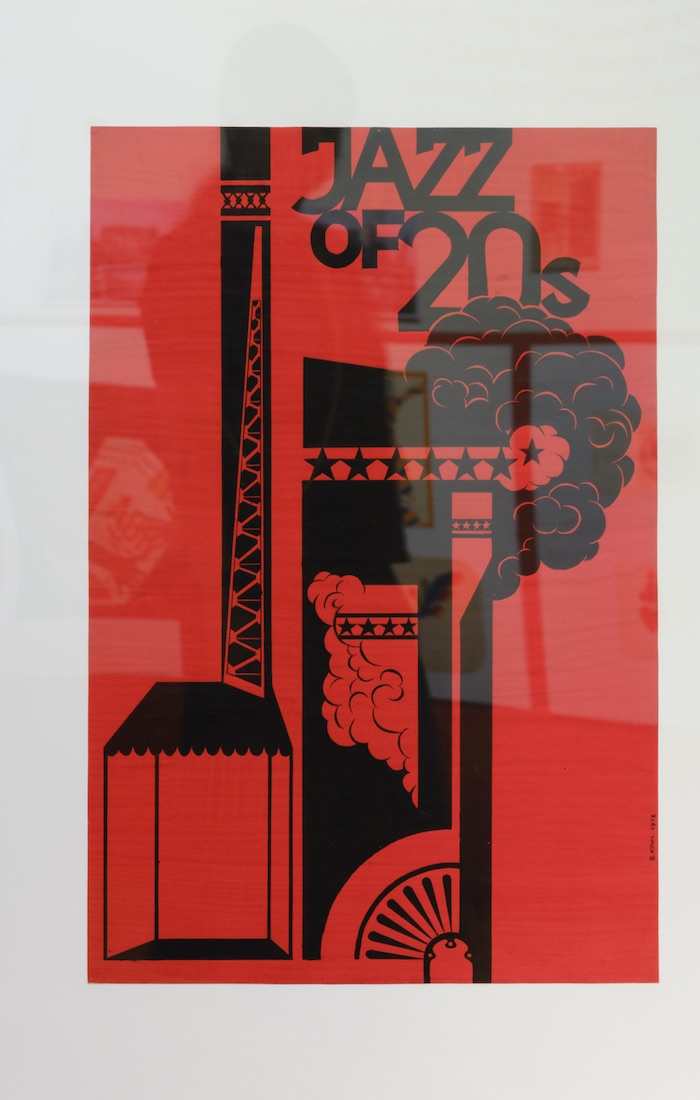
Jazz of the 20s, 1972 · Official retrospective ↗
A poster before a commission
Vladimir Krichevsky is a graphic designer, book artist, critic, historian and collector. The breadth matters, but attribution matters more: this collection contains his own early posters, not historical works that he later studied. The official Krich retrospective describes these pieces as self-initiated work made outside commissions—graphic propositions in which lettering is already an argument.
The five selected posters move between compressed geometry, drawn capitals, collage and deliberately unstable rhythm. Short inscriptions are not captions added to an image; they organise the image.
Utility before style
Krichevsky has called his field a “genre of utility”. That makes these posters useful study material: every distortion has a job. Scale establishes a speaking voice, spacing turns reading into tempo, and the tool remains visible without becoming decoration for its own sake.
Research as design practice
His writing ranges across Soviet graphic design of the 1920s and the Thaw, overlooked authors, reproduction, typography and Dutch graphic culture. The productive lesson is not to imitate one historical manner. It is to look for what has not yet been properly seen, then describe it with enough precision to change present practice.
Why only five works?
This first edition is intentionally narrow. We accepted only separately photographed posters with a compact verbal composition. Book spreads, pages dominated by body text, exhibition vitrines and images containing several distinct works were excluded, even when they were valuable documents.
Sources
Works and dates are taken from the Voznesensky Center retrospective ↗. Biographical and critical context was checked against the Artguide interview ↗, the Moskvichka interview ↗ and Krichevsky’s research on Futurist typography ↗.
The archive uses cropped documentation from the official exhibition page for educational analysis. Every work retains its source link; no image is presented as an unrestricted original file.